Dangerous heat index expected in 3 areas on Friday – Pagasa: Spotting Screenshot Errors and Payment Traps
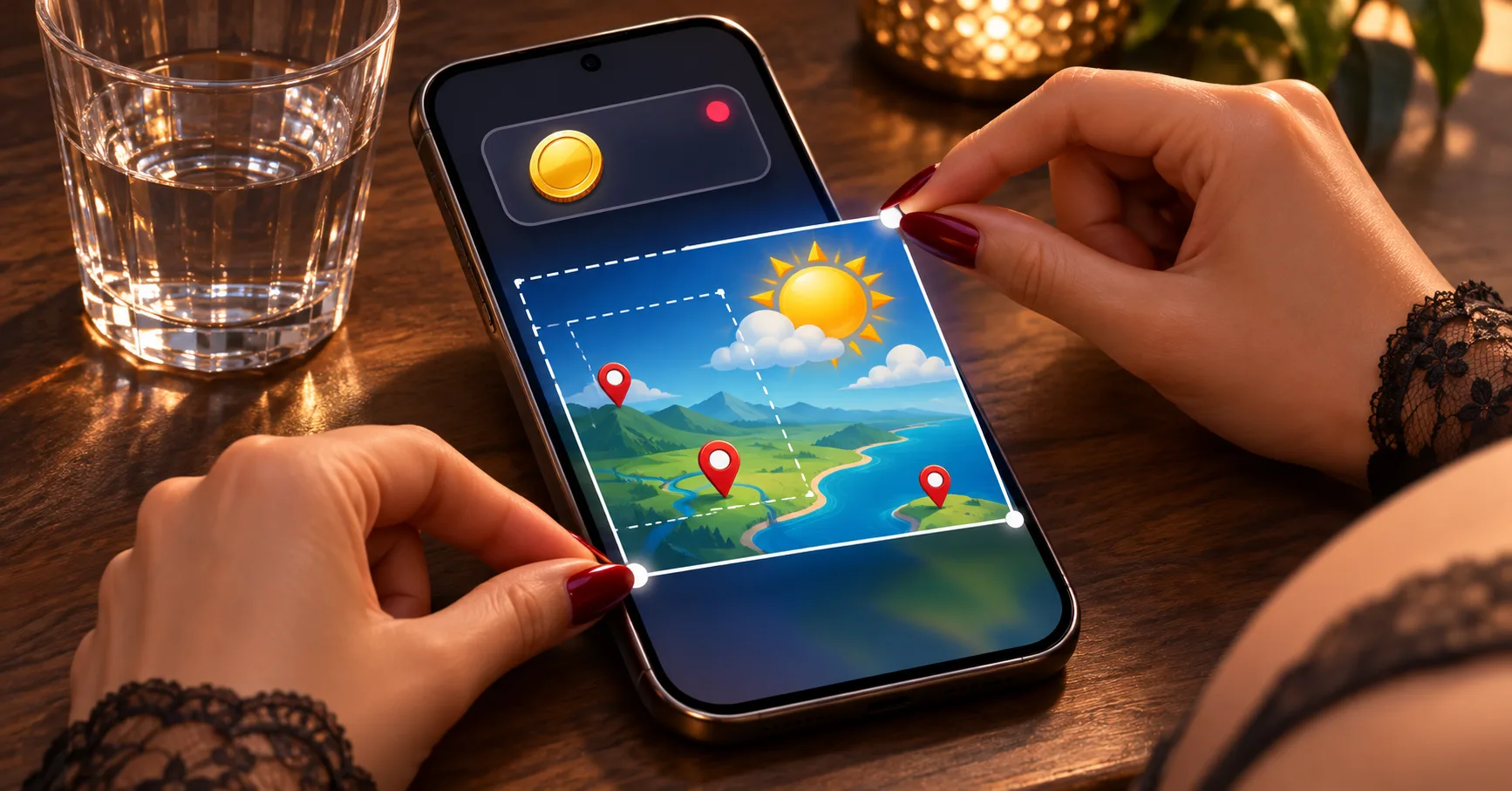
You are checking your phone before leaving home, and a Messenger screenshot says dangerous heat is expected in 3 areas on Friday. The lower edge is cropped, the location list is missing, and someone has added a link underneath. You need to decide whether it changes your journey, your mobile-data plans, or a payment you were about to make.
The headline “Dangerous heat index expected in 3 areas on Friday – Pagasa” needs its original context before it becomes useful. Friday alone does not identify the forecast period. The number 3 does not identify your municipality, and a forwarded caption does not establish what PAGASA actually published.
The practical correction is to separate the weather information from everything attached to it. Verify the original bulletin, match the location, and examine any request for money independently. A familiar headline can travel much further than the details that explain it.
Why a weather screenshot should not trigger a payment
A weather headline can explain why you want to rearrange an errand, but it cannot authenticate a merchant or payment recipient. If a Facebook post adds a delivery charge or a Messenger sender requests a reservation payment, that request needs its own checks.
The same boundary applies to gambling: a PAGASA headline offers no evidence that an online casino deserves your deposit. Weather reporting and trust in a business are separate questions.
For ordinary errands, compare the request with the service you actually arranged. A GCash transfer request should connect to a recognisable transaction, not merely to a persuasive screenshot. A Maya payment screen also cannot establish whether the accompanying weather claim is accurate.
Suppose, hypothetically, a message requests PHP 150 to preserve a PHP 500 booking because of the heat. Those amounts describe the demand, not its legitimacy. Open the booking through your usual route and check whether the charge appears there before authorising anything.
There are therefore 2 separate records to inspect: the weather source and the transaction record. Keeping them separate prevents a true headline from lending credibility to an unrelated payment demand. The same principle underlies checking a payment request before sending money.
Six checks that restore the headline’s missing context
Start with the source rather than the comment thread. Facebook reactions, Messenger forwarding labels, and repeated screenshots cannot replace an identifiable publication. Use the following sequence when the headline is all you have.
- Locate the original PAGASA bulletin or the original publisher’s article, rather than accepting a Facebook screenshot with its address and publication details removed.
- Read the publication date and forecast validity together, checking which Friday the headline describes before applying its warning to your own plans.
- Find all 3 named locations in the original item, then check whether your destination is explicitly included rather than assuming regional coverage.
- Check whether each figure describes heat index, air temperature, a forecast, or an observation, preserving the label beside the number when taking notes.
- Compare the screenshot with the complete source, including its legend, footnotes, update information, and any explanation of the locations or measurements shown.
- Open any linked payment or service account independently, then check the recipient and transaction purpose without relying on the weather post’s assurances.
The sequence matters because each check answers a different question. An authentic PAGASA graphic can still be circulated outside its original period. Likewise, an accurately quoted headline can lose important qualifications when someone crops the article below it.
Finding your province mentioned somewhere in a Facebook discussion is not equivalent to finding your destination in the source. Read the actual place names carefully. A screenshot naming 3 locations should not become a claim that every nearby town has the same forecast.
If you cannot recover the original item, keep searching through the publisher or PAGASA directly. Do not complete the missing sentence from memory. A second person repeating the same crop does not provide independent confirmation.
Read the labels before comparing the numbers
A common mistake is to compare 2 numbers while ignoring what each represents. Heat index and air temperature are different measures, so their labels must remain attached. Check the source’s explanation before treating an apparent difference as a contradiction.
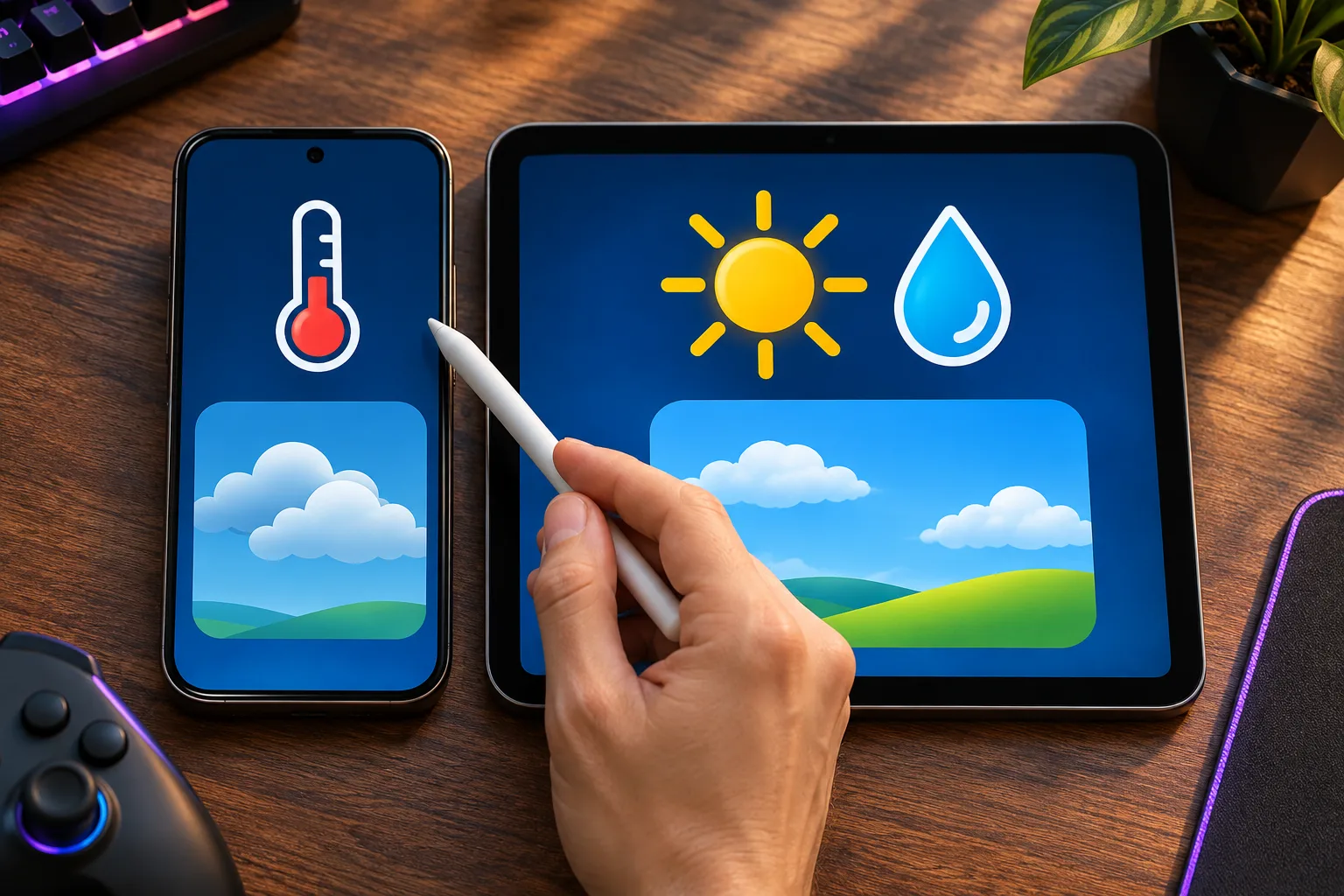
Consider a hypothetical comparison between a phone weather card showing 33°C and a screenshot showing a 42°C heat index. Those displays do not necessarily make competing claims. The correction is to compare the measure, location, and applicable period together, rather than choosing whichever number looks more dramatic.
The same discipline applies to timing. In a hypothetical pair of screenshots saved at 8 a.m. and 11 a.m., the later save time does not prove a later forecast. Look for the publication or update information inside the original source.
Your phone’s gallery records when an image entered your device. That record is useful for reconstructing what you received, but it cannot establish when PAGASA issued the underlying information. Keep those 2 timelines distinct.
Prepare the source before mobile data becomes inconvenient
If you expect to switch between home Wi-Fi and mobile data, open the complete source before leaving. Save the relevant details together, including the location list and validity information. A dramatic headline alone makes a poor offline reference.
This is a preparation step, not a prediction of service disruption. A heat headline does not establish that Globe, Smart, or DITO will lose connectivity. For connection problems, check your provider through its usual channels and inspect your own device’s connection status.
Keep 2 useful records: the source address and an uncropped image of the relevant bulletin. The address lets you revisit the publication when connected. The image preserves context while offline, although it cannot show updates issued after you saved it.
If a payment screen stops loading while you switch networks, inspect the transaction history before trying again. A frozen screen does not establish whether the payment completed. Follow checking a pending e-wallet transaction for that separate problem.
Warning signs in the post, caption, and payment request
Not every incomplete screenshot is deliberately misleading. Someone may simply have cropped it for easier reading. The warning signs below identify claims that need further checking; they do not prove fraud by themselves.
- The screenshot retains “Friday” and “3 areas” but removes the publication date, location names, or surrounding explanation needed to interpret the headline.
- A Facebook caption attributes a Globe, Smart, or DITO outage to the weather without pointing to an identifiable notice from that provider.
- A Messenger sender adds a GCash or Maya payment demand that does not appear in the booking, order, or service account itself.
- A linked page requests your e-wallet PIN or an SMS verification code while claiming that payment access depends on confirming the weather alert.
- A forwarded graphic displays several temperatures but crops away the labels identifying heat index, air temperature, observation time, or forecast validity.
- A sender insists on immediate payment while discouraging you from opening the original PAGASA source or contacting the service through your usual route.
The common pattern is borrowed authority. A recognisable institution appears in one part of the message, while an unrelated claim appears beside it. Readers can accidentally treat the whole package as one authenticated announcement.
Correct that mistake by tracing each claim separately. PAGASA is the source to consult for the weather statement. Globe, Smart, or DITO is the relevant provider for a claim about its own service. A merchant must explain its own charge.
Do not let repeated forwarding blur these responsibilities. Receiving the same image through Facebook, Messenger, and SMS produces 3 copies, not 3 independent sources. Follow the publication trail behind each copy before treating repetition as corroboration.
If money has already moved, preserve the transaction trail
If you paid after reading a weather-linked message, begin with the payment record. Open GCash, Maya, or the relevant account through your normal route. Establish what the transaction history says before assuming either success or failure.

Preserve the amount, recipient details, transaction reference, and displayed status. Keep the original conversation alongside the weather screenshot and the link that accompanied it. These records show what was requested and what action followed.
For a hypothetical PHP 150 disputed charge, explain the sequence plainly: the sender requested payment, you authorised PHP 150, and the promised service remains unresolved. Avoid replacing that sequence with a broad accusation about PAGASA. The weather organisation’s name in a message does not identify the payment recipient.
Contact the merchant through a previously established route if the transaction concerns a real booking or order. For the payment itself, use the provider’s own support route. Ask for a case reference and keep the response with your transaction records.
Do not send another transfer merely because the sender labels it an unlocking fee or refund requirement. Check that instruction independently with the relevant provider. An additional payment can create another disputed transaction without resolving the first.
If you entered account credentials into a linked page, use the provider’s official account-security and recovery process. Keep sensitive credentials out of ordinary message threads. Your evidence checklist for a payment dispute can help organise the records without exposing access details.
Recovery depends on the transaction and the applicable process; a screenshot cannot promise an outcome. Focus your complaint on the recipient, amount, authorisation, and disputed service. Those details are more useful than repeatedly forwarding the headline.
Questions raised by the Friday headline
Does “3 areas” mean my whole province is covered?
Read the actual location list and the source’s description of its coverage. The number 3 counts the areas referenced in that item; it does not identify them. Do not substitute a Facebook comment’s place name for the location stated in the original publication.
Can I use a saved PAGASA image without mobile data?
A saved image can help you consult the information it contains, especially when the date, location, and legend remain visible. It cannot reveal later updates. Save the source address too, then revisit the original publication when you reconnect.
Does the headline explain why my e-wallet payment is pending?
No causal connection follows from the headline alone. Check the payment status in GCash, Maya, or your actual provider, and consult its support channel when needed. Avoid repeating the transfer simply because a loading screen disappeared during a network change.
What should I correct if I already forwarded the crop?
Return to the same conversation and share the original source with its publication details and location list. Explain which part of your earlier interpretation needed correction. If you also shared a payment link, separate that request from the weather information and withdraw any unsupported endorsement.