MMDA flags 5 major cemeteries for Undas traffic management: Read the Claim Before Changing Your Plans
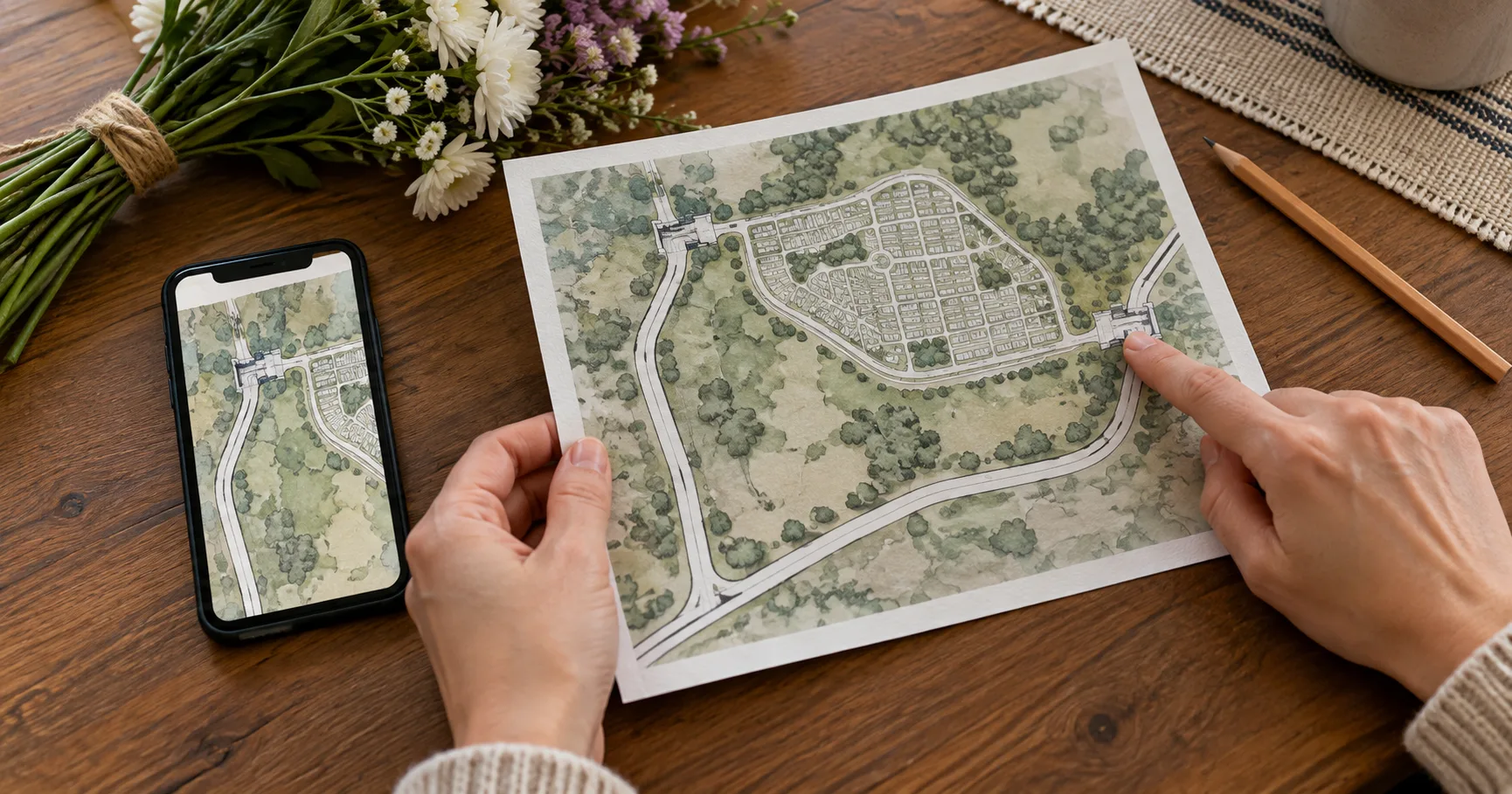
You are arranging an Undas cemetery visit when a family Messenger chat fills with a traffic headline, a cropped map, and conflicting advice. Someone suggests leaving before sunrise; another forwards a link supposedly explaining access arrangements. Before changing your journey or sending money, establish which details belong to an identifiable traffic advisory.
The phrase “MMDA flags 5 major cemeteries for Undas traffic management” gives you a subject to investigate. It does not establish the advisory’s year, identify every affected entrance, or describe a payment requirement. Treat it as the beginning of your check. Your destination, approach road, and intended arrival time need more precise evidence.
Separate the travel decision from any request for money
For a first-time visitor, the immediate risk is reading more into the headline than its words support. “Flags” can describe attention or concern; it does not itself mean closure. Likewise, “traffic management” does not specify whether vehicles face diversions, parking restrictions, controlled entry, or ordinary monitoring. Those distinctions change what you should do.
The number 5 describes the headline’s claimed scope, not a complete picture of travel across Metro Manila. A cemetery outside that group might still have separate access arrangements. A cemetery inside it might remain accessible through designated approaches. Read the actual instructions before treating either possibility as settled.
Money introduces a separate question about who is receiving it and for what service. A Messenger sender might attach a parking reservation, transport offer, or supposed access payment to an otherwise plausible traffic message. The traffic claim and the payment request need independent support. Familiar wording does not connect them automatically.
If the destination unexpectedly becomes an online casino asking for a deposit, stop: the cemetery headline provides no evidence about that site's trustworthiness.
Consider a hypothetical request for a PHP 200 “entry confirmation” sent through GCash or Maya. That amount could feel small beside your travel budget, but affordability does not establish a legitimate purpose. Identify the service and verify its seller separately. Use the same approach when checking unfamiliar payment links attached to travel messages.
Follow the claim back through six checks
Keep the forwarded message available while you inspect its source. Opening a second browser tab makes comparison easier than relying on memory. With MMDA, cemetery management, and local government pages potentially discussing different responsibilities, matching the exact claim matters more than finding similar language.
- Locate the original MMDA publication behind the headline, using a separately opened source rather than trusting the destination embedded in a Messenger forward.
- Check the publication year, revision notice, and stated coverage period, ensuring the instructions concern the Undas visit you are planning.
- Read the complete cemetery names and locations, then match your intended destination rather than relying on a familiar shortened name.
- Identify the specific instruction affecting your journey, distinguishing a closed road, redirected vehicle route, restricted parking area, and pedestrian entrance.
- Compare the relevant cemetery or local government notice with the MMDA material, paying attention to entrances, vehicle categories, and operating periods.
- Verify any payment request through independently located contact details, confirming the service, recipient, amount, and cancellation conditions before authorizing a transfer.
A search result can help locate a source, but its preview is only an extract. Open the page and inspect the surrounding explanation. If Facebook carries the post, examine the page’s identity and posting history. A familiar profile picture or copied MMDA graphic is not enough by itself.
Suppose a hypothetical instruction applies from 6 a.m. to 10 a.m., while your family expects to arrive at 11 a.m. You still need to check for another instruction covering the later period. The end of one restriction does not establish unrestricted access. Look for the full schedule and any separate entrance conditions.
When 2 pages disagree, avoid combining the convenient parts into your own version. One might address private cars while the other concerns pedestrians. Compare their scope before deciding that either is wrong. If the conflict remains, ask the office responsible for the disputed road or entrance.
Turn the wording into a journey you can explain
Once the source is established, translate its instructions into your actual approach to the cemetery. Google Maps and Waze can help you inspect road layouts and possible routes. Use the advisory to check restrictions that matter to your visit. A suggested route alone does not establish permission to use an entrance.
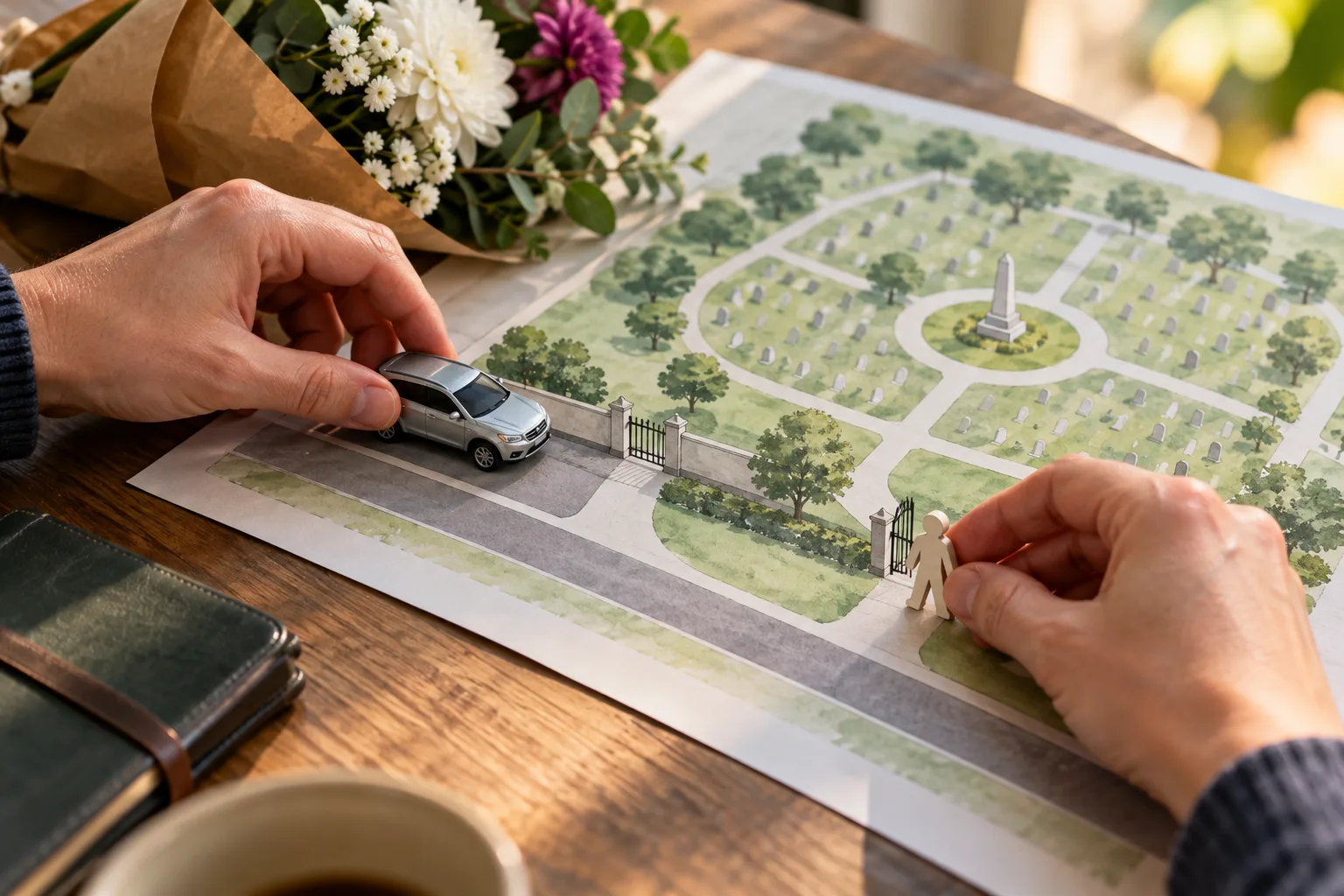
Your family needs a usable destination, not simply a cemetery name. A vehicle drop-off point and a pedestrian gate can be different places. That difference matters when accompanying an older relative, carrying flowers, or meeting people arriving separately. Check the final part of the journey as carefully as the main road.
- Match the named cemetery to its full address, then compare the entrance in the advisory with your saved Google Maps or Waze destination.
- Confirm whether your approach involves walking, a private car, or public transport, because instructions for one category may not cover another.
- Read every time window attached to the affected road, including any separate instruction that applies when your family plans to leave.
- Save the complete relevant notice with its source visible, so a weak mobile connection does not leave you relying on a cropped image.
- Agree on a meeting point outside the vehicle route, and share the verified entrance details with relatives using Messenger.
- Keep return transport money separate from optional spending, especially if an unverified parking or access offer appears during the journey.
For a hypothetical budget of PHP 1,000, setting aside PHP 600 for return transport leaves PHP 400 for everything else. A PHP 200 unverified reservation would consume half that remainder. This calculation does not validate the seller. It shows why even a modest request can disrupt the trip.
Saving a notice also needs care because a saved image will not update itself. Check the original source again before departure when possible. If relatives circulate a different version, compare the source and revision details. Our guide to checking whether a travel advisory still applies explains that distinction in more detail.
Recognize when a forwarded message changes the story
Misleading messages do not always invent everything from scratch. A real cemetery name or recognizable MMDA reference can sit beside an unsupported instruction. The key is identifying where the message moves beyond its evidence. Be especially careful when that extra instruction asks you to pay or disclose account information.
- A forwarded image removes the publication year or source address while presenting its route instructions as applicable to your planned Undas visit.
- A Messenger account claims that every visitor must pay, but cannot point to an independently accessible notice describing that requirement.
- A GCash or Maya recipient differs from the seller you identified, and the sender offers urgency instead of a clear explanation.
- A page switches from cemetery access information to an unrelated registration form, while continuing to display traffic-related wording or graphics.
- A supposed booking agent requests your wallet PIN, password, or one-time code as part of checking a parking or transport reservation.
- A sender promises guaranteed passage through a restricted road without identifying an applicable exception in the actual traffic instructions.
These signs justify pausing, but they do not all prove the same thing. A cropped screenshot might be careless sharing rather than deliberate deception. An unexplained payment destination creates a different concern because money could reach the wrong recipient. Respond to the specific problem instead of assigning one label to everything.
For example, a hypothetical PHP 150 parking offer needs evidence about the parking service and seller. It cannot be validated merely because the message also mentions 5 cemeteries. Conversely, verifying a route does not verify that offer. Keep each claim attached to the evidence that actually supports it.
Resolve a disputed booking without expanding the loss
If you already paid for a parking or transport arrangement, separate the transaction record from the seller’s explanation. Your GCash or Maya history can help establish what your wallet recorded. It does not, by itself, establish whether a parking space existed or the promised service was delivered.
Write down the exact mismatch in plain language. For example: “I paid PHP 250 for a reserved space, but the seller now says reservations are unavailable.” That hypothetical statement is more useful than “the Undas payment failed.” It identifies the amount, promised service, and unresolved issue without assuming the cause.
- Preserve the original offer, conversation, recipient details, transaction reference, and wallet status before messages disappear or the seller edits the booking description.
- Ask the seller to explain the specific mismatch through the contact route you independently verified, keeping the response with your transaction record.
- Use the wallet’s own help channel to report the relevant transaction concern, describing the recorded status without assuming that recovery is guaranteed.
- Record each response and case reference, and reject requests for another transfer supposedly needed to unlock a refund or validate your complaint.
A second transfer is a new financial decision, even when someone describes it as a technical step. Suppose PHP 250 has already left your wallet and another PHP 100 is requested for “release.” Paying would increase your exposure to PHP 350. It would not resolve the original evidence problem.
If the wallet status itself is unclear, inspect it through the app rather than through a seller’s screenshot. Follow the provider’s displayed guidance for the recorded status. Avoid inventing a waiting period from somebody else’s experience. For organizing the evidence, see preparing a payment dispute record.
Questions before the family sets off
Does the headline establish that 5 cemeteries are closed?
No. The wording “flags 5 major cemeteries for Undas traffic management” does not itself state closure. Look for the specific access instruction in the original material. Distinguish restrictions on surrounding roads from restrictions on cemetery entry, because they affect different parts of your journey.
Can a Google Maps or Waze route replace the advisory?
Use Google Maps or Waze to examine the journey, then compare the route with the relevant access instructions. A navigation suggestion does not prove that a particular gate accepts vehicles or that a restriction has ended. Confirm the approach that matches your transport type and arrival time.
Is a GCash or Maya payment request proof of an official arrangement?
No. The named payment channel does not establish who authorized the service or whether the recipient represents it. Verify the parking, transport, or access claim through independently located contact details. Check the recipient and terms before paying, even when the requested amount seems modest.
What should I send relatives instead of the cropped headline?
Share the original source link and the part that identifies your destination, entrance, and applicable travel period. Explain whether the instruction concerns vehicles or pedestrians. Keep the full notice available for comparison, so relatives can check its context instead of passing along another isolated image.